

By Linsey Birusingh Yoga Medicine Therapeutic Specialist E-RYT 1000
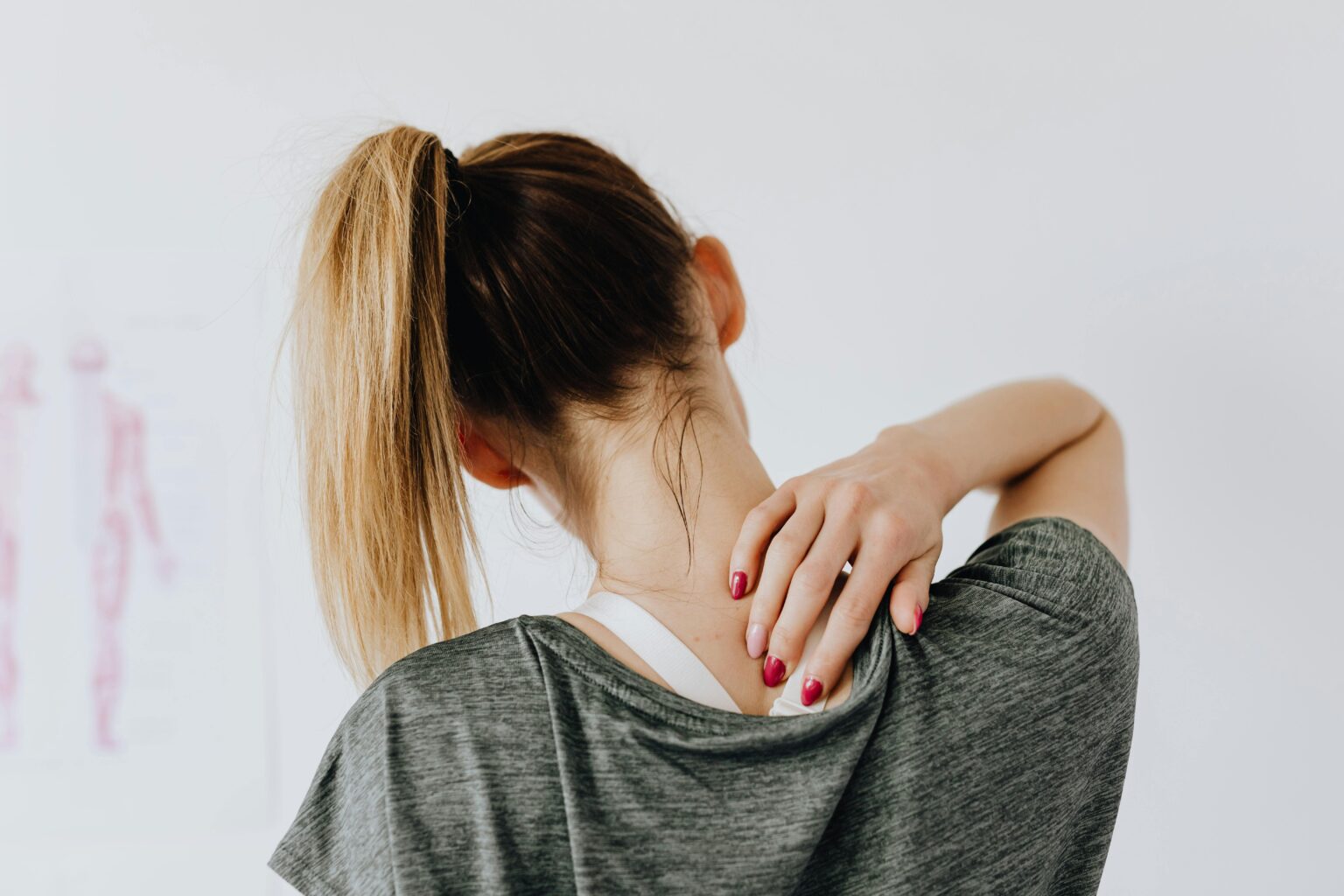
Pain is your body’s signal to pay attention. It is calling you to care for yourself. Whatever affliction you may be currently experiencing, it’s important to remember that most times, pain can be mitigated and ephemeral. And while pain is experienced differently and at a range of severities, yoga principles can aid in your overall quality of life. Here are a few ways I’ve found research supports yoga for pain relief.
1. Pin point your pain.
It sounds obvious, but many lack the body awareness to actually tend in the current moment to their body’s calls for relief. Pain shows up in the body if it is phyiscal, emotional, or spiritual. It manifests in tension and distress that can be treated through somatic exercises. For example, many of my clients carry their stress in painful headaches at the base of the skull. Stretching and compressing the area not only unwinds the hardened knots of fascia, but also the nervous system, lowering their stress levels.
If you can mindfully scan your state each day, you create better body awareness. Now you can consciously tend to exactly which areas want stretched right now. You can also be cognizant of cushioning injuries that do not need certain poses. In any yoga class, you are welcome to modify poses with blocks and mat folds so as to not deepen your affliction. You are also welcome to add movements that a teacher may not call out if you know your body is calling for them.
2. Counteract habitual pose patterns.
Many times, we are afraid to move because it will intensify pain. Some of my clients sit in a chair all day long because movement is hard. Yet what you practice, you become. Your body remodels muscle and fascia every second, and it will adapt to your lifestyle. You do not want your body to become restricted to that chair pose.
Be gentle with yourself, but finding poses that stretch and use muscles in different forms can not only make your body feel easier to live inside, but create more fluid pathways for blood circulation and nerve pathways. A well rounded chair yoga class, yin sequence or vinyasa helps touch points in the body you may not even realize are related to your overall pain experience. Many physical points, even if they are not the exact point of disease, are directly responsible and correlated to other body points. Their release can actually create a global nervous system relaxation, or ease pain because they have been compensating for your injury.
3. Range of motion
Don’t be afraid to expand your movements to their fullest expression. The less range of motion you practice, the more rigid your physical body becomes. In your yoga practice, the bigger and more bold you can be, the more pliable and free your tissues become. Rigid tissues inhibit nerve signaling, lymph drainage and blood flow. Free these pathways not only with these bold expressions, but lots of hydration.
4. Compress and stretch counter points.
Many physical points, even if they are not the exact point of disease, are directly responsible and correlated to other body points. Their release can actually create a global nervous system relaxation, or ease pain because they have been compensating for your injury.
Many clients come with back pain that persists even with back stretches. This is due to tight, compensating trigger points that actually exist in the front abdominal muscles. It may seem counter-intuitive, yet stretching and compressing these opposite points helps relieve the back. The tapestry of your muscles are also not compartments. Your calf muscles are connected through strong fascia to your hamstrings, back, neck and feet. Find a professional who knows these myofascial trains and tend to them in your yoga practice. There are great resources online on trigger points, counter points and anatomy trains if you do your own research.
5. Tax your body in a way that gets you out of your comfort zone but does not exacerbate pain.
When were not feeling well, the last thing we want to do is move. But pushing yourself on the mat in a loving way disposes of old energy, making room for new nourishment. Equally important, it clears your mental landscape and helps process emotion. Our body is constantly renewing. What you do to detoxify and nourish today, whether body, mind or spirit, will make a difference tomorrow.
6. Meditate on non-judgmental awareness.
When pain persists, its hard to think of anything else. Meditation helps! Here is an easy meditation I prescribe for clients with pain:
Find a comfortable nest to be completely still for 10 minutes. Find a few deep, releasing breaths. As you come into full exhales, start to notice a place in the body that feels good. Sit with that focus, not judging or labeling the feeling for 10 breaths. Next, find a place in the body that feels neutral: not great, not painful, but just “there”. Be with that focus for 10 breaths. Finally, find a place in the body of discomfort. Focus on it, without judgement but with loving kindness and compassion for ten breaths. As you take a few relaxing last breaths, feel those spots all at once, in gratitude for the body and it’s ability to heal and change throughout time.
This exercise helps us emotionally regulate. If done regularly, our patience and perception of body changes for the better. We learn that our current state is not the state we will be in tomorrow, and that we can compassionately listen to our bodies and work with them for optimal living.
2026 Power Life, All Rights Reserved.
Built with 🤍 by Blink
2026 Power Life, All Rights Reserved.
Built with 🤍 by Blink Wellness
"*" indicates required fields
Lorem ipsum dolor sit amet, consectetur adipiscing elit. Sed a bibendum ipsum. In vel molestie libero, non interdum tortor. Pellentesque finibus, nisl sit amet maximus finibus, nunc sapien imperdiet leo, sit amet finibus mi urna in leo. Duis id est nec ipsum finibus mollis viverra at justo. In quis bibendum lacus. Orci varius natoque penatibus et magnis dis parturient montes, nascetur ridiculus mus. Lorem ipsum dolor sit amet, consectetur adipiscing elit. Proin elementum lectus erat, eget cursus nunc venenatis eget. Pellentesque mollis id felis eu egestas. Sed vel sapien nisl. Vestibulum massa arcu, laoreet ac turpis a, fringilla rhoncus mi. Vivamus consectetur arcu quis hendrerit laoreet. Curabitur interdum quam sed libero condimentum ornare. Suspendisse consequat finibus neque ac vehicula. Praesent aliquet lobortis nulla, non finibus nibh sagittis id. Nullam bibendum risus non arcu iaculis volutpat.
Cras commodo accumsan mattis. Vivamus euismod rhoncus aliquam. Phasellus ultricies, enim nec tincidunt tristique, velit sem laoreet nulla, vulputate sodales turpis odio quis nisi. Etiam at ex mauris. Curabitur eleifend tortor nunc, luctus euismod nunc accumsan ut. Suspendisse non sollicitudin est. Sed vitae malesuada neque. Aliquam facilisis fermentum massa, mattis dapibus justo semper eu. Quisque magna leo, imperdiet dignissim odio id, efficitur mattis quam. Aliquam mattis nulla sit amet felis consequat, sit amet iaculis magna elementum.