

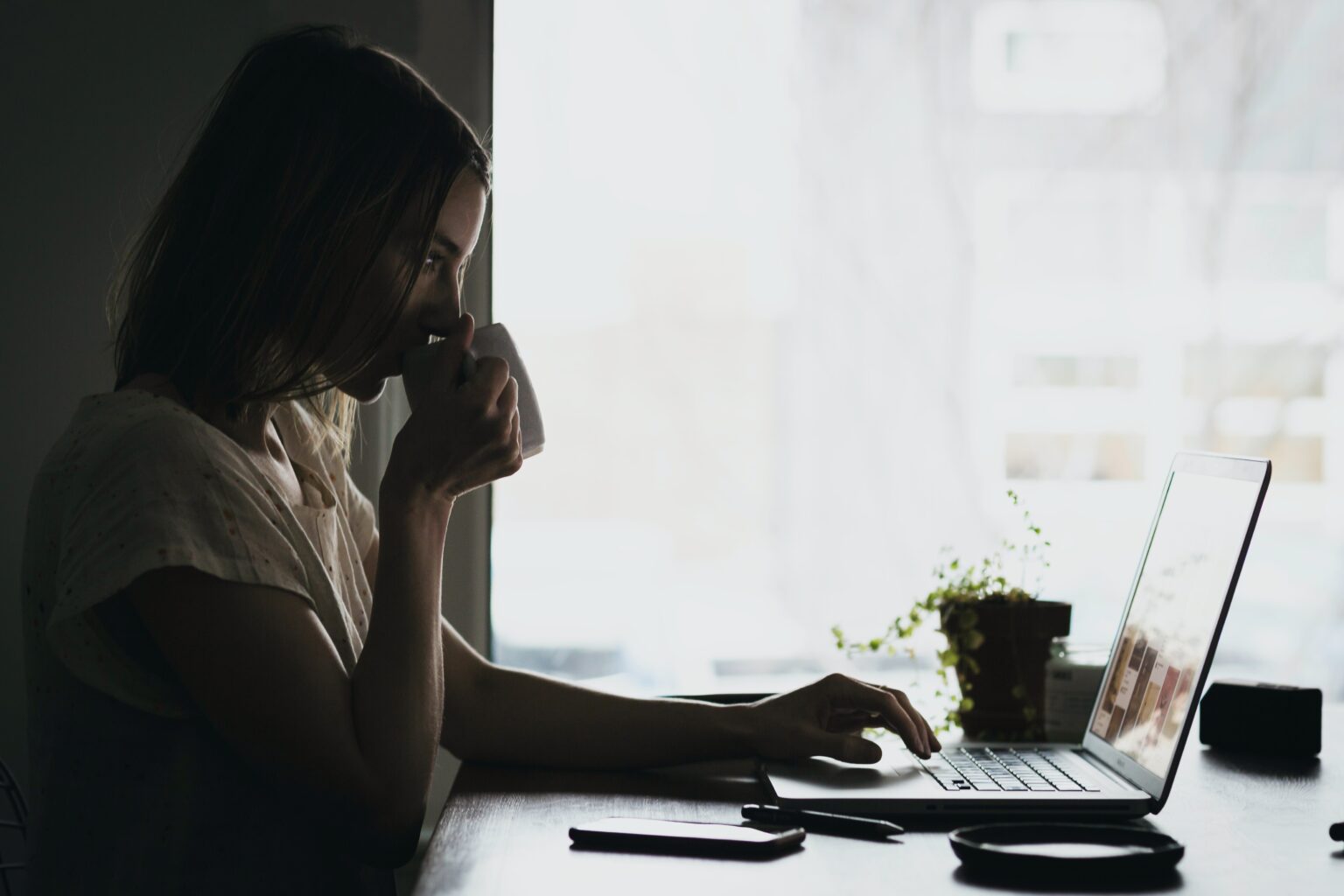
Let me set the stage for you: In March, I got married, got diagnosed with chronic nerve damage, and just started getting into a rhythm with my German Shepherd puppy. And then I started working at home full time. My one-bedroom apartment started to feel really small with my 75 lb puppy and my now husband there all day, every day. My back started to ache more and more as I sat on my couch all day, trying to stay focused on my laptop as the TV blared in the background. Power Life was closed down due to COVID-19. The only entertainment I had included Real Housewives of New York City and debating with my husband about what we’d order for dinner.
This sort of worked for me for a few months, with ebbs and flows in my ability to stay focused and stay happy. Around Labor day, it all started to fall apart. I realized that I couldn’t keep doing yoga with the amount of pain I was in. I couldn’t continue to just roll out of bed and sign into my work Slack in an appearance to be “available.” And I simply couldn’t keep pretending like everything was OK.
After reflection I realized that what I missed more than anything was simply having a routine. So, I decided to make one.
“Depending on what they are, our habits will either make us or break us. We become what we repeatedly do.” ―Sean Covey
According to science, routines are good for our physical, mental, and emotional health. They keep us on a path that aligns with what we want to achieve, whether it’s more sleep or more productivity. Without a routine, stress can run rampant, causing us to work less hard and struggle to finish the most common tasks.
Here are a few benefits of having a routine:
This took a lot of trial and error (and a lot of good and bad days). To figure out your routine, I first recommend that you figure out what is important to you and why.
For me, that looked like this:
Using these five factors as guidance, it became pretty easy to see what a good routine could look like for me. Here’s what I came up with:
I like to wake up early, usually by 6 or 7, to get a workout in. Working out early in the morning means that I’ll have more time in the evening when my husband goes to the gym or soccer practice for my alone time. Let’s be honest, this only happens about three days a week.
Once I’m back inside, I make coffee and take my dog out. I use this walk as a pseudo “commute” to work. I realized pretty quickly into my Work From Home life that rolling out of bed and starting to work was just not good for my mental health. Using a walk as my commute helped me transition from my home brain to my work brain the same way that driving did.
I tried to be online by 8:30 or 9 am. Although my work doesn’t require us to be “at work” before 10 am, I realized that the earlier I’m online, the earlier I can log off. Not a massive revelation in general, but a big one for me.
I love to-do lists. I love checking things off my to-do list. Creating a plan for the day helps me prioritize what needs to get done and helps prevent that 7:30 pm oh-my-gosh-i-forgot-to-do-this feeling. Sometimes my to-do list is two things long, and other times it can be an entire page.
When working from home, it can be very tempting to work through lunch to hit your hours faster. Plus, there’s not much else to do. But I realized pretty early on that I needed a mid-day break, and lunch was the most logical place to do it.
As mentioned above, I struggle with chronic nerve damage in my lower back and can start to feel pretty uncomfortable by mid-day. Forcing myself to take at least one meeting while standing up allows me to decompress (physically and mentally). Plus, most of the time I end up standing up for longer than I intended to.
This was the hardest part for me: Stopping working. We’ve been pretty busy at work and with a pretty slow (or nonexistent) social life currently, there wasn’t really a reason not to keep working past work hours. Until I realized that the more I worked, the more my home felt like work instead of a home. I needed to log off and enjoy actually being in my personal space if I ever wanted my couch to feel like a place I could relax.
Just like walking my dog became a transition for starting work, it also became a transition for me to be done with work as well. Taking her out for a walk or to the dog park allowed me to “leave the office” and come back with the intention of relaxing for the night. If you don’t have a dog, you can just take a walk on your own to get the mail or around the block—I promise it will help!
I have The Five Minute Journal, which is an approachable way to practice mindfulness in the morning and at night. If I remember, I write in this when I wake up (it doesn’t happen often, which is why it’s not up in my morning routine), but I pretty much always remember to check in at night. This journal asks me to list out three amazing things that happened that day and to think about what could have made my day better. I really like it as a way of being truthful with myself about how I could have had a better day (usually I say something like “read a book!” or “eat more tacos” etc.). It also forces me to think constructively about my day and find the good in it.
This is the most important part of my routine: Not feeling guilty if I watched too many episodes of Real Housewives or didn’t eat the most healthy meal. In the middle of a pandemic, simply being safe is the most important thing we can do, so a few days off your routine is OK. In fact, it’s completely normal and should be celebrated.
For some, this might not matter at all. My husband is just fine without a routine and completely wings it every single day. But for me, this matters a lot. It helps me stay focused, stay productive and, most importantly, stay positive. Without a routine, my habits fall to the wayside and I’m left wondering why I’m tired or bored or not getting things done.
Happiness is a direction, not a place. — Sydney J. Harris
My routine helps me stay on the path I want to be on. Some people might find a routine to be stifling or boring. For me, if your routine does that, it’s not the right routine.
Be patient with yourself as you start to figure out what works for you in our new reality. Tap into that mindfulness that we build on our mats and remember what it was like when you first tried a new yoga pose: uncomfortable and frustrating. That’s what it’s like starting a new routine. It’ll get more comfortable, and you’ll get more confident the more you practice.
2026 Power Life, All Rights Reserved.
Built with 🤍 by Blink
2026 Power Life, All Rights Reserved.
Built with 🤍 by Blink Wellness
"*" indicates required fields
Lorem ipsum dolor sit amet, consectetur adipiscing elit. Sed a bibendum ipsum. In vel molestie libero, non interdum tortor. Pellentesque finibus, nisl sit amet maximus finibus, nunc sapien imperdiet leo, sit amet finibus mi urna in leo. Duis id est nec ipsum finibus mollis viverra at justo. In quis bibendum lacus. Orci varius natoque penatibus et magnis dis parturient montes, nascetur ridiculus mus. Lorem ipsum dolor sit amet, consectetur adipiscing elit. Proin elementum lectus erat, eget cursus nunc venenatis eget. Pellentesque mollis id felis eu egestas. Sed vel sapien nisl. Vestibulum massa arcu, laoreet ac turpis a, fringilla rhoncus mi. Vivamus consectetur arcu quis hendrerit laoreet. Curabitur interdum quam sed libero condimentum ornare. Suspendisse consequat finibus neque ac vehicula. Praesent aliquet lobortis nulla, non finibus nibh sagittis id. Nullam bibendum risus non arcu iaculis volutpat.
Cras commodo accumsan mattis. Vivamus euismod rhoncus aliquam. Phasellus ultricies, enim nec tincidunt tristique, velit sem laoreet nulla, vulputate sodales turpis odio quis nisi. Etiam at ex mauris. Curabitur eleifend tortor nunc, luctus euismod nunc accumsan ut. Suspendisse non sollicitudin est. Sed vitae malesuada neque. Aliquam facilisis fermentum massa, mattis dapibus justo semper eu. Quisque magna leo, imperdiet dignissim odio id, efficitur mattis quam. Aliquam mattis nulla sit amet felis consequat, sit amet iaculis magna elementum.