

Let’s be honest. Life in 2020 is not only fast-paced, but inundated with an unending list of fears. In a time when we’re uncertain whether we’re being hoodwinked, click-baited or told the truth, anxiety can become the norm. But it doesn’t need to become yours! Yoga teaches us is that we have internal tools to combat the stress of uncontrollable, external circumstances. As a teacher specially trained in yoga for mental health, wellness, and trauma I’ve provided some tools to calm my anxious mind.
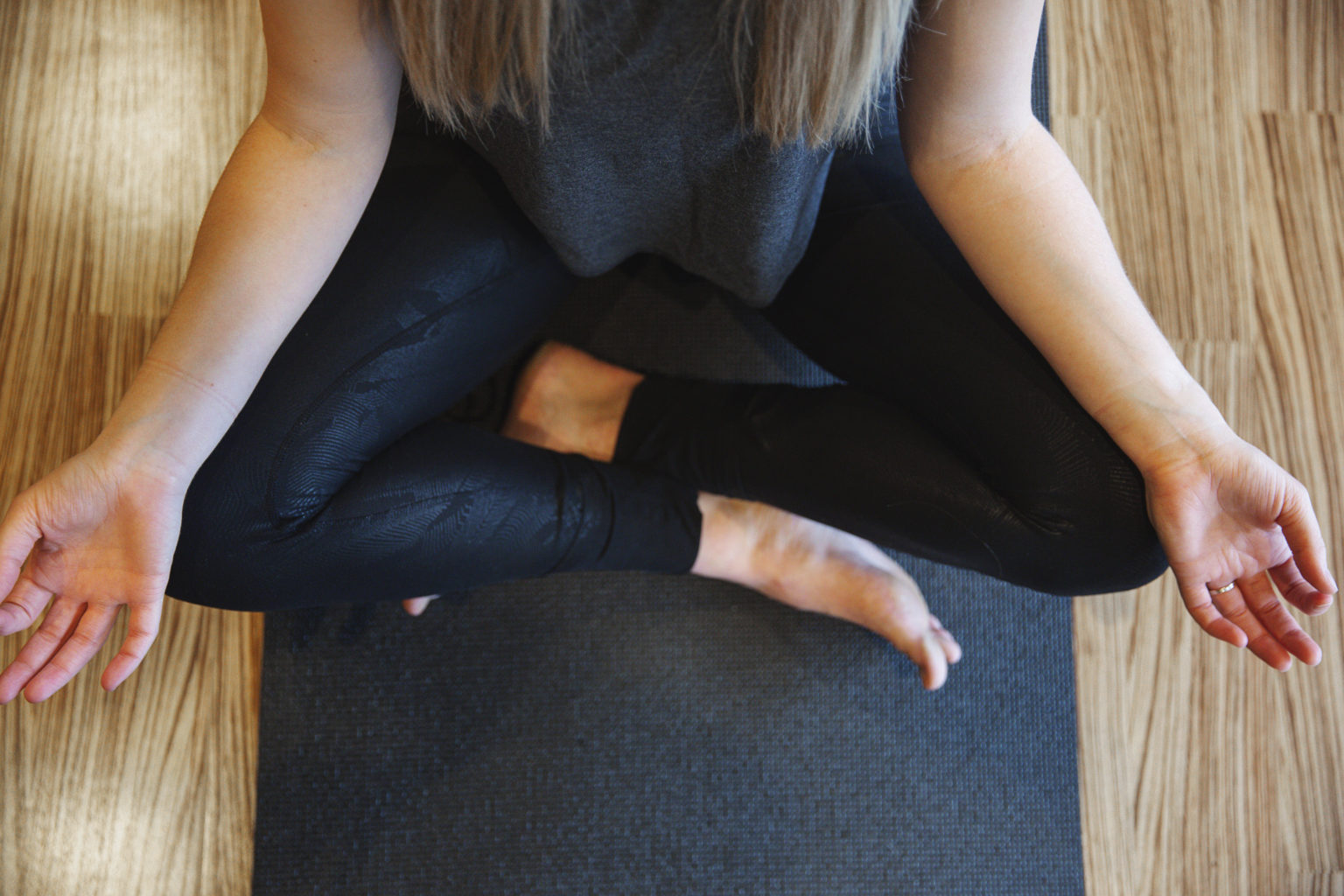
Self-awareness is your first line of defense. Notice when your mind begins to spin out of control and implement intervention before it snowballs. Yogis have practiced this for thousands of years. If trying to slow a spinning mind seems like a foreign task, try meditating for just ten minutes a day. Focus on one thing, whether it’s your breath, an object or a mantra and bring the mind back every time it strays. This will not only give you a clear understanding of your current mind state, but with practice will allow you to slow the stream of thought and come into the present. This can be difficult in the beginning. Just like riding a bike, it’s common to find the road a bit bumpy at first attempt. Rest assured that a disciplined practice will yield great results!
Breathing techniques, called pranayama, can soothe the vagus nerve which is responsible for much of our nervous system’s ability to switch from sympathetic (fight or flight mode) to parasympathetic (rest and digest mode). Vagus translates to ‘to wander’, and the nerve is named for the way it wanders from the brain, down the neck, and through a multitude of your internal organs. When anxiety and tension manifest in the body and gut, the vagus nerve tells your brain you are anxious.
To tame its response, try a three-part yoga breath with a much longer emphasis on your exhale. Your breath will move from your belly, to your chest, to collar bones. As you exhale your collar bones will deflate, then chest, then belly. The vagus nerve is toned by HRV (heart rate variability). When you inhale, your heart beats faster. When you elongate your exhale, a neurotransmitter signals your heartbeat to slow. This variability calms the vagus nerve.
You may also try ujjayi, the textured, ocean-sounding breath we use in yoga. Gently constrict the glottis in your throat and create a warming, audible breath in and out of your nose. This sends soothing vibrations to the vagus nerve, helping you relax. According to findings in the journal Cognition & Emotion, controlling our breath can change how we feel, creating a 40 percent variance in experience of fear, anger, and sadness.
Physical practice is vital for fending off physical manifestations of anxiety and grounding yourself in the present moment. Anxiety is fear of the future and rooted in hypothetical scenarios. When you come to your mat, yoga asks you to notice your breath, listen to signals from your body and mind, and respond accordingly. You cannot think about a hypothetical conversation with your boss and memorize a yoga flow at the same time. Inverted (or upside down) poses activate your parasympathetic nervous system. A more active, sweaty practice alleviates pent up energy that needs healthy release. A well-rounded yoga class will touch all of these aspects!
Progressive relaxation meditations are one of my favorite resets. Your body, energy, and breath can be rigid when you’re stressed. Because relaxation is a learned skill, a good progressive relaxation will ask you to notice this tension and consciously release it. You can find this type of meditation on our schedule or free on my website www.yogathrill.com/meditations .
Setting technology limitations is vital. In fact, I joke with my students that much of yoga’s benefit comes from leaving your cell phone behind and turning your smart watch on silent! In a world where notifications and bad news are constantly in the palm of our hand, it is essential that we unplug and dive inside. This inner world is the only place we can consistently affect change. This is where your balance, sanity, and peace reside. Use it as a refuge any time you feel anxious, and tap back into your innate power.
2026 Power Life, All Rights Reserved.
Built with 🤍 by Blink
2026 Power Life, All Rights Reserved.
Built with 🤍 by Blink Wellness
"*" indicates required fields
Lorem ipsum dolor sit amet, consectetur adipiscing elit. Sed a bibendum ipsum. In vel molestie libero, non interdum tortor. Pellentesque finibus, nisl sit amet maximus finibus, nunc sapien imperdiet leo, sit amet finibus mi urna in leo. Duis id est nec ipsum finibus mollis viverra at justo. In quis bibendum lacus. Orci varius natoque penatibus et magnis dis parturient montes, nascetur ridiculus mus. Lorem ipsum dolor sit amet, consectetur adipiscing elit. Proin elementum lectus erat, eget cursus nunc venenatis eget. Pellentesque mollis id felis eu egestas. Sed vel sapien nisl. Vestibulum massa arcu, laoreet ac turpis a, fringilla rhoncus mi. Vivamus consectetur arcu quis hendrerit laoreet. Curabitur interdum quam sed libero condimentum ornare. Suspendisse consequat finibus neque ac vehicula. Praesent aliquet lobortis nulla, non finibus nibh sagittis id. Nullam bibendum risus non arcu iaculis volutpat.
Cras commodo accumsan mattis. Vivamus euismod rhoncus aliquam. Phasellus ultricies, enim nec tincidunt tristique, velit sem laoreet nulla, vulputate sodales turpis odio quis nisi. Etiam at ex mauris. Curabitur eleifend tortor nunc, luctus euismod nunc accumsan ut. Suspendisse non sollicitudin est. Sed vitae malesuada neque. Aliquam facilisis fermentum massa, mattis dapibus justo semper eu. Quisque magna leo, imperdiet dignissim odio id, efficitur mattis quam. Aliquam mattis nulla sit amet felis consequat, sit amet iaculis magna elementum.