

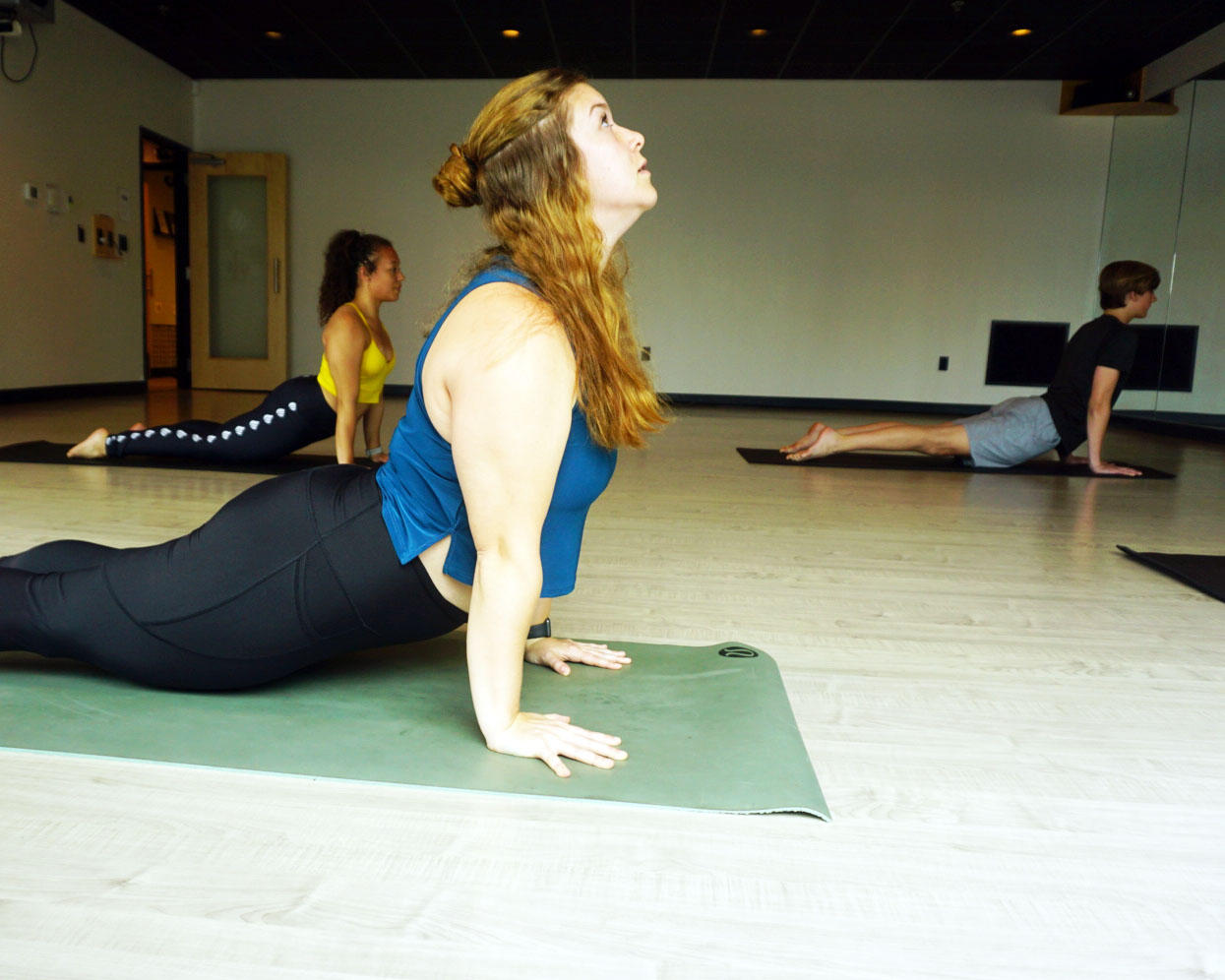
Power Life is committed to keeping our students and staff safe. We’ve implemented many new safety measures over the last 6 months, but one safety measure that we’ve had in place since day one is our fresh air HVAC systems. These systems are constantly pulling in fresh air from outside, heating the air and then using that fresh air to heat our studios. The initial reason we chose to install fresh air HVAC was to avoid stagnant, recycled, air that is often found in group fitness studios, the added benefit now is that practicing in a Power Life studio is essentially like practicing outdoors in the fresh air.
I sat down with Power Life President, Adam Geneser, to get a better understanding of fresh air HVAC. Keep reading to learn more about these systems.
Abby: What is a Fresh air HVAC?
Adam: A fresh air HVAC system operates by constantly bringing in fresh air from outside. Generally, a typical HVAC system uses recirculated air and very little outside air. Our systems bring in 100% fresh air from outside, heat that air, and then pump that air into our studios. Our system is bringing in 5-10x more fresh air than the best regular ventilation systems. From day one we have an air system that uses only outside air and does not recirculate the air – this is very uncommon in fitness.
Our systems are better than the air in an airplane, and on par with that of a hospital.
Abby: How does it work?
Adam: Each facility has large louvers or air intake systems that are connected to the outside of our studios. These louvers are always bringing fresh air into the system and it is heated in the system and then pumped into the studios and the old air is exhausted outside.
Abby: How hot does it heat the air before pumping it into the studios?
Adam: Generally, over 150 degrees – and we have read research that the virus gets killed at 132 degrees.
Abby: Why did you decide to install these systems?
Adam: I want people to understand that we have had these systems in place from Power Life day one. We decided to install them due to experience with other group fitness studios; in studios that don’t use fresh air the air can be pungent, heavy, or hard to breathe. We wanted really good quality crisp air – and the only way to do that is to use fresh air.
The reason that most studios don’t use these systems, especially in the Midwest, is that they are really expensive. The initial investment is high and then think about heating air to 150 when it is 0 outside – it is not cheap. But regardless of expense, it was important to have the best quality air as possible from the get go.
Abby: How does a fresh air HVAC system keep our students and staff safe?
Adam: You’re always breathing outside air. Fresh air systems do wonders for indoor air quality. ‘When an air conditioner does not bring in fresh air, people may end up being more exposed to pollutants indoors than outside as the system will be circulating old air rather than drawing new clean air from outside.’ – The Environmental Protection Agency (EPA)
Our system also increases air exchange. Increasing air exchanges is one of the technical points behind a fresh air system. That said, we push enough CFMs to do a fresh air exchange (or the amount of time to completely change out the air of the room) every 3 to 5 min depending on occupancy and how physical the activity in the room is. Said another way… every 90 seconds half the room is already exchanged with fresh air as the fresh air is constantly being pushed into the studio and the old air is exhausted or removed. Occupancy is determined by CO2 PPM, so the more people or the more physical the activity, the more air exchanges. On top of that the air is heated up to 150 which helps in relation to control of airborne type viruses.
If you have more questions about our HVAC system or any of the other safety measures that we’ve put in place to keep you safe please do not hesitate to leave a comment, or contact us!
2026 Power Life, All Rights Reserved.
Built with 🤍 by Blink
2026 Power Life, All Rights Reserved.
Built with 🤍 by Blink Wellness
"*" indicates required fields
Lorem ipsum dolor sit amet, consectetur adipiscing elit. Sed a bibendum ipsum. In vel molestie libero, non interdum tortor. Pellentesque finibus, nisl sit amet maximus finibus, nunc sapien imperdiet leo, sit amet finibus mi urna in leo. Duis id est nec ipsum finibus mollis viverra at justo. In quis bibendum lacus. Orci varius natoque penatibus et magnis dis parturient montes, nascetur ridiculus mus. Lorem ipsum dolor sit amet, consectetur adipiscing elit. Proin elementum lectus erat, eget cursus nunc venenatis eget. Pellentesque mollis id felis eu egestas. Sed vel sapien nisl. Vestibulum massa arcu, laoreet ac turpis a, fringilla rhoncus mi. Vivamus consectetur arcu quis hendrerit laoreet. Curabitur interdum quam sed libero condimentum ornare. Suspendisse consequat finibus neque ac vehicula. Praesent aliquet lobortis nulla, non finibus nibh sagittis id. Nullam bibendum risus non arcu iaculis volutpat.
Cras commodo accumsan mattis. Vivamus euismod rhoncus aliquam. Phasellus ultricies, enim nec tincidunt tristique, velit sem laoreet nulla, vulputate sodales turpis odio quis nisi. Etiam at ex mauris. Curabitur eleifend tortor nunc, luctus euismod nunc accumsan ut. Suspendisse non sollicitudin est. Sed vitae malesuada neque. Aliquam facilisis fermentum massa, mattis dapibus justo semper eu. Quisque magna leo, imperdiet dignissim odio id, efficitur mattis quam. Aliquam mattis nulla sit amet felis consequat, sit amet iaculis magna elementum.